Base · ROB RUN
Chemical laboratory profit
Pick the reactor, the freezer and the rarity of the batch: the calculator shows how long the batch takes, what it brings and when the setup pays for itself.
Machine prices come from the game data; timings and cargo prices come from players’ measurements — check them on your server. The game does not publish how many crystals one reagent gives, so the calculator counts one cycle as one crystal.
Base · ROB RUN
Batch calculator
Modules
The reactor cooks the next batch while the freezer holds the last one: the calculator counts the reactor cycle plus one freeze pass and 5 seconds of collecting. Crystals go to the Smuggler, powder to the Fence.
How to use it
- Set the reactor and the freezer: the reactor tier changes the number of cycles and the cycle length, the freezer tier changes how many crystals it holds.
- Pick the rarity of the batch and the crime level: cargo prices grow with the level (Smuggler up to +25%, Fence up to +50%).
- Tick the modules — they are part of the setup. Payback is counted from the profit per hour.
A reactor I batch by rarity
Four reactor I cycles, reagents bought at 20,000 $, crime level 1, crystals handed to the Smuggler.
| Rarity | Crystals | Revenue | Reagents | Profit | Profit per hour |
|---|---|---|---|---|---|
| Common | 4 | 120,000 $ | 80,000 $ | 40,000 $ | 113,834 $ |
| Epic | 4 | 180,000 $ | 80,000 $ | 100,000 $ | 284,585 $ |
| Legendary | 4 | 300,000 $ | 80,000 $ | 220,000 $ | 626,087 $ |
Building the lab
The buy price is from the game data, the research price is from Lenny’s Tree. Any reactor and freezer work, the table is only needed to crush crystals into powder.
| Machine | Buy | Research | Total |
|---|---|---|---|
 Chemical Laboratory |
110,000 $ | 160,000 $ | 270,000 $ |
 Chemical Reactor I — 4 cycles × 15 min |
40,000 $ | 20,000 $ | 60,000 $ |
 Chemical Reactor II — 6 cycles × 9 min |
300,000 $ | 150,000 $ | 450,000 $ |
 Chemical Reactor III — 8 cycles × 6 min |
700,000 $ | 350,000 $ | 1,050,000 $ |
 Industrial Freezer I — 4 spots |
20,000 $ | 15,000 $ | 35,000 $ |
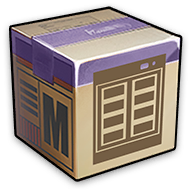 Industrial Freezer II — 6 spots |
90,000 $ | 30,000 $ | 120,000 $ |
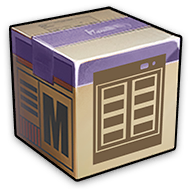 Industrial Freezer III — 8 spots |
250,000 $ | 100,000 $ | 350,000 $ |
 Lab Table |
15,000 $ | 10,000 $ | 25,000 $ |
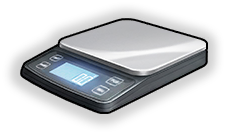 Laboratory Scales |
15,000 $ | 15,000 $ | 30,000 $ |
Modules
Three reactor modules raise the chance of a better rarity, the game publishes no percentages. The evaporator and the refrigerant speed freezing up.
| Module | Fits | Effect | Buy | Research |
|---|---|---|---|---|
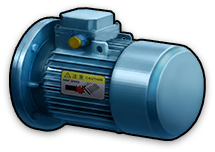 Industrial Engine |
reactor | better rarity odds | 20,000 $ | 10,000 $ |
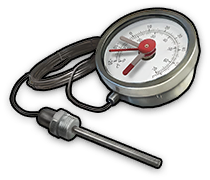 Industrial Thermometer |
reactor | better rarity odds | 120,000 $ | 50,000 $ |
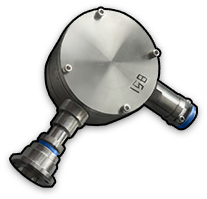 Chemical Converter |
reactor | better rarity odds | 300,000 $ | 150,000 $ |
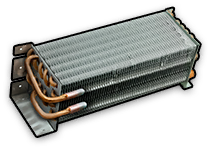 Improved Evaporator |
freezer | freezes 11.7% faster | 100,000 $ | 40,000 $ |
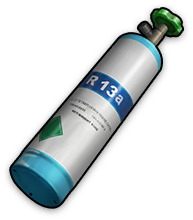 Quality Refrigerant |
freezer | freezes 13% faster | 250,000 $ | 100,000 $ |
Cargo prices
The price at level 1 → at level 5. The Smuggler takes crystals and concentrate, the Fence takes powder.
| Rarity | Reagent | Crystals | Powder (each) |
|---|---|---|---|
| Common | 20,000 $ | 30,000 $ → 37,500 $ | 1,000 $ → 1,500 $ |
| Epic | 30,000 $ | 45,000 $ → 56,250 $ | 2,000 $ → 3,000 $ |
| Legendary | — | 75,000 $ → 93,750 $ | 4,000 $ → 6,000 $ |
Common reagents give common crystals, quality reagents raise the odds. Powder is 30 times cheaper than a crystal, but one crystal gives 10 portions.
Common questions
How is the batch profit counted?
Revenue minus the reagents you bought. A batch holds the cycles you set: one cycle is one reagent and one crystal.
Why one crystal per cycle?
The game does not publish how many reagents a cycle eats or how many crystals it gives. The calculator counts one cycle = one reagent = one crystal; check it on your server and adjust data/lab.json.
Where do crystals and powder go?
Crystals go to the Smuggler (cargo, up to +25% at level 5), powder to the Fence (up to +50%). Crystals are worth more: a common one is 30,000 $, a legendary one 75,000 $.
What do the modules really do?
The three reactor modules raise the chance of an epic or legendary batch — by how much, Kefir does not publish. The evaporator freezes 11.7% faster, the refrigerant 13%; their bonuses stack.
Should I crush crystals into powder?
Powder is 30 times cheaper than a crystal, but one crystal gives 10 portions and any Fence takes it without a trip to the Smuggler. The game does not publish the yield — test one crystal first.
Why is the payback so different?
It depends on how many reagents you find yourself: your own canisters cost 0 $, bought common ones 20,000 $, quality ones 30,000 $. Pick “Found in the world” to see the ceiling.